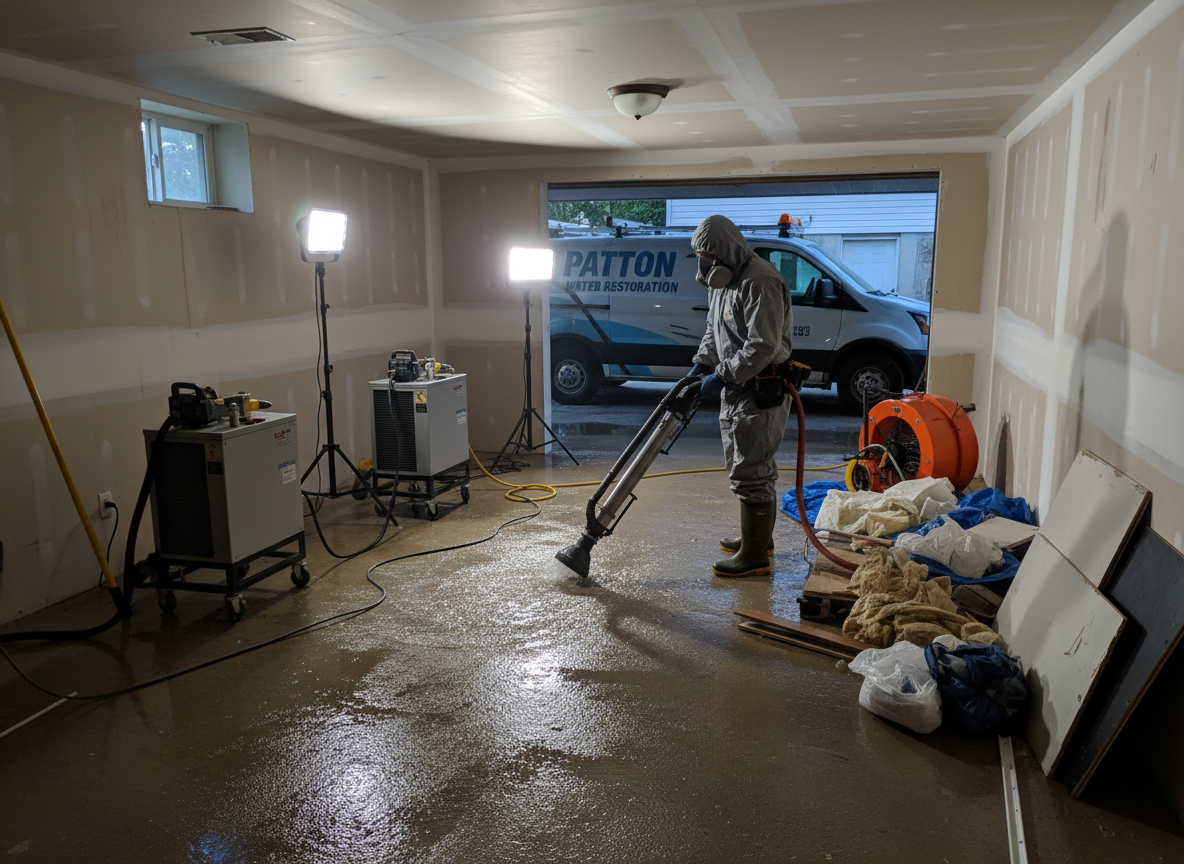
Patton homes built decades ago often feature plaster walls and slab foundations that trap water longer than modern construction in Highland. After a supply line burst or roof leak, moisture migrates into the soil around the property because of the area's clay-heavy ground, which slows natural drainage. Technicians must pull baseboards early and use moisture meters on both sides of interior walls to avoid hidden pockets that later cause mold during the hot summer months.
Mild winters in San Bernardino County reduce freeze-related pipe bursts but increase the chance of slow leaks going unnoticed until they reach subflooring. When water sits under vinyl or older hardwood, it can wick into adjacent rooms through the slab joints common in Patton State Hospital-era housing stock. Restoration crews bring in commercial air movers and dehumidifiers sized for the square footage while monitoring relative humidity to prevent secondary damage to electrical boxes and insulation.
San Bernardino building codes require permits for any structural repairs after water events exceeding certain thresholds. Crews document every step with photos and moisture logs so homeowners can satisfy insurance adjusters without delays. In Patton, narrow streets around the hospital can slow equipment delivery, so teams stage trucks at the 3102 E Highland Ave location for quicker deployment at any hour.
Technician insight
In Patton, the thing that catches most people out with 24-hour water restoration near me is how the older plaster walls around Patton State Hospital hold moisture far longer than the newer drywall in Highland, so skipping the full meter scan on both sides of the wall always leads to callbacks once summer heat pushes humidity back up.
Slab leak near Patton State Hospital
A slow leak under a 1960s Patton home reached the living room slab and began wicking into the hallway plaster. We mapped elevated readings two rooms away, pulled the baseboards, and ran drying equipment for four days until all readings matched the unaffected areas. The homeowner avoided mold growth and received the documentation needed for their claim.
How it works
- 1
Emergency Assessment
Arrive on site within the hour to locate the water source and map affected rooms using moisture meters.
- 2
Water Extraction
Remove standing water with portable pumps and wands before it spreads into neighboring units or soil.
- 3
Drying and Monitoring
Place air movers and dehumidifiers, then check readings daily until drywall and subfloors reach safe moisture levels.
- 4
Final Documentation
Provide photos, logs, and a scope letter for insurance or permitting needs in San Bernardino County.
Pricing
Upfront quotes based on affected square footage, materials, and drying time required; no hidden fees.