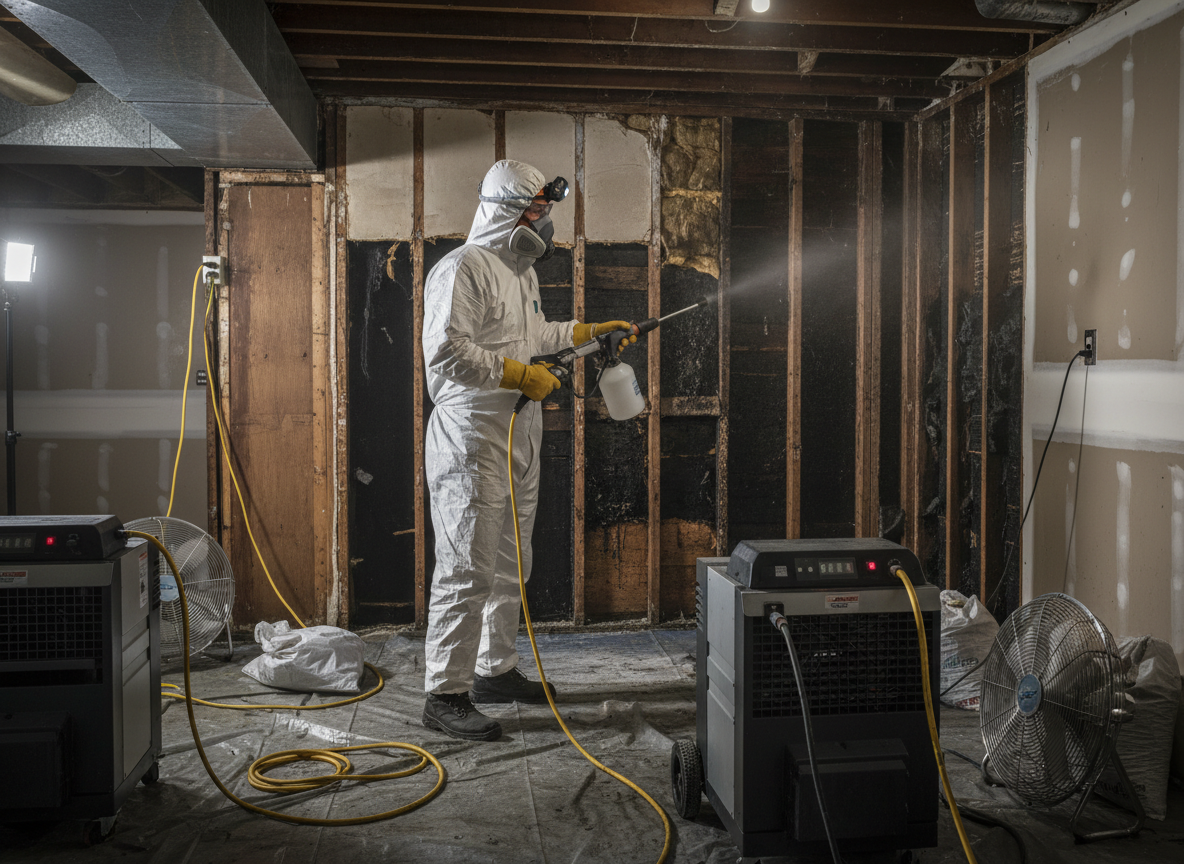
In Patton's Mediterranean climate, hot summers accelerate mold growth once water intrusion occurs from leaks or storms, especially in homes built decades ago around the Patton State Hospital area. Older drywall and plaster in San Bernardino County properties trap moisture behind walls, and the mild winters fail to provide enough natural drying, allowing colonies to spread into attics and crawl spaces. Remediation starts with moisture mapping using infrared tools to locate hidden pockets without unnecessary demolition, followed by HEPA filtration and antimicrobial application on affected framing.
Water damage from Highland or San Bernardino overflows often saturates carpet pads and subfloors in Patton ranch-style homes, creating conditions where black mold emerges within 48 hours if not addressed. Technicians remove and dispose of porous materials like insulation while preserving structural lumber through targeted sanding and sealing. Local soil conditions with poor drainage near the hospital grounds can prolong drying times, requiring industrial dehumidifiers running for several days to reach safe moisture levels below 15 percent.
Homeowners in Patton frequently overlook HVAC systems after flooding, allowing spores to circulate through ducts in single-story homes common to the neighborhood. Proper remediation includes negative air pressure setups to contain the work area and post-remediation air sampling to confirm clearance. This approach prevents recurring issues tied to the region's seasonal temperature swings that can reintroduce humidity into previously affected spaces.
Technician insight
In Patton, the thing that catches most people out with Mold remediation after water damage is older homes near Patton State Hospital where mild winters let moisture linger in crawl spaces under the slab foundations, so what looks like a small wall stain turns into full subfloor work once you pull the carpet.
Hidden Mold After Summer Leak
A Patton homeowner noticed musty odors weeks after a roof leak near Highland Avenue. Inspection revealed mold behind drywall in the laundry room extending into the attic due to trapped heat from hot summer days. The team contained the space, removed affected insulation, dried the framing over four days, and cleared the air samples before repairs.
How it works
- 1
Inspection and Containment
Technicians assess moisture levels and set up containment barriers to isolate the affected zone in Patton homes.
- 2
Moisture Removal
Industrial equipment extracts standing water and dries materials, accounting for the slow evaporation in mild local winters.
- 3
Mold Elimination
HEPA vacuuming and antimicrobial treatments remove colonies from framing and surfaces without spreading spores.
- 4
Clearance Testing
Air samples confirm mold levels are safe before reconstruction begins on the property.
Pricing
Costs depend on the square footage impacted, depth of hidden moisture in older Patton construction, and drying duration required by seasonal humidity.