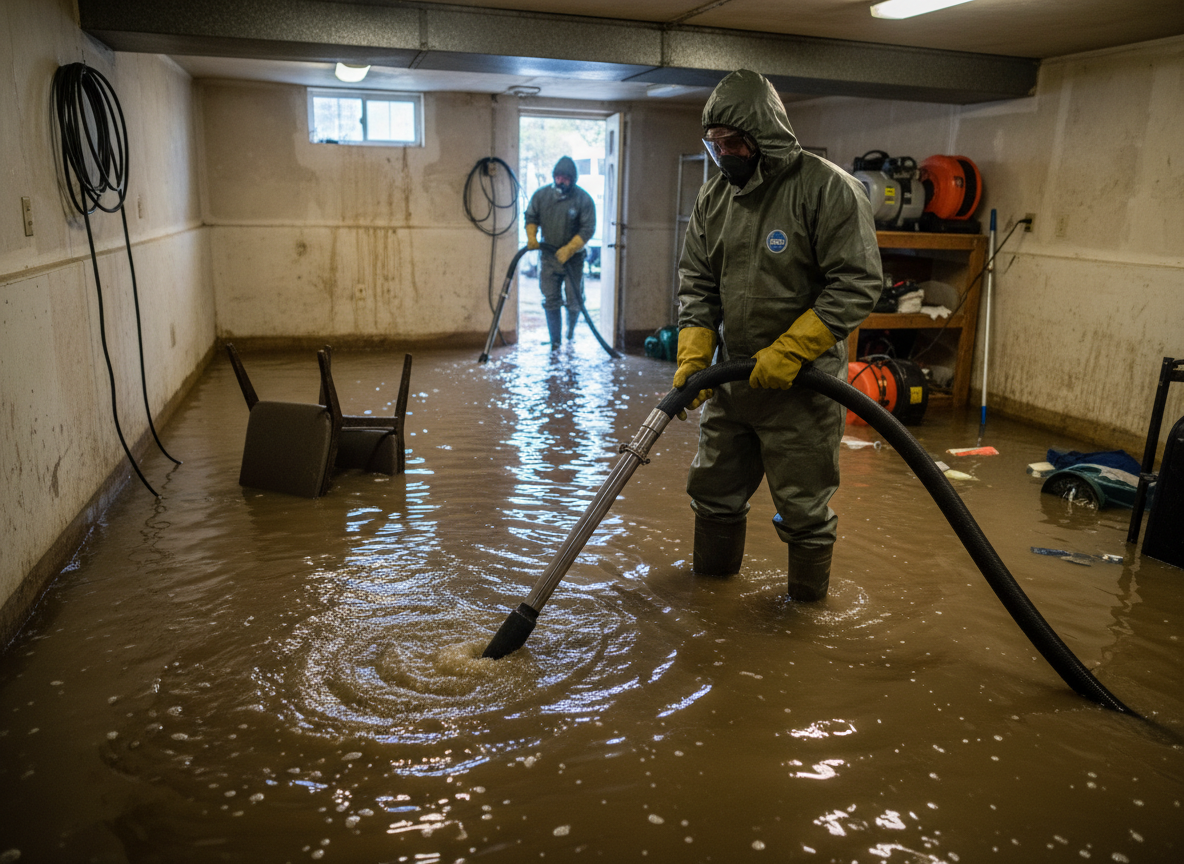
Patton sits in San Bernardino County with a Mediterranean climate of hot, dry summers and mild winters that bring occasional heavy rain. Many homes around Patton State Hospital and along Highland Avenue date to the mid-20th century, with original cast-iron pipes and slab foundations that allow water to travel far under the structure before it surfaces. Emergency water removal here requires immediate pump-out followed by moisture mapping because hidden moisture in those older slabs can reappear weeks later if not fully addressed.
Rapid extraction matters most during the brief winter rain events when saturated clay soils around E Highland Ave push groundwater back toward foundations. Technicians use truck-mounted extraction units and subfloor drying systems to pull water from beneath vinyl and hardwood floors common in Patton housing stock. Leaving residual moisture in these older materials often leads to cupping floors or drywall damage that spreads into adjacent rooms near the hospital grounds.
San Bernardino County building codes require proper disposal of contaminated water from appliance failures or sewer backups. Crews separate gray water from black water on site and document moisture levels room by room so homeowners can show insurers the exact extent of the loss. This documentation step protects properties in Patton where insurance adjusters frequently question claims involving older plumbing.
Technician insight
In Patton, the thing that catches most people out with Emergency water removal is the clay soil along Highland Ave that holds water against older slab foundations. Homeowners often think once the standing water is gone the job is done, but moisture keeps wicking back up through the concrete for days if you don't keep the drying equipment running.
Overnight water heater failure near Patton State Hospital
A homeowner on E Highland Ave called after a water heater leaked through the night into the slab. We found water had traveled under the living room floor and into the hallway drywall. Pumps removed the bulk water, then drying mats and dehumidifiers ran for four days until readings stabilized. The subfloor dried without removal and no mold developed.
How it works
- 1
On-site assessment
Arrive within the hour, locate the water source, and test moisture levels in walls, floors, and subfloor areas typical of Patton homes.
- 2
Water extraction
Deploy pumps and wands to remove standing water from slabs and crawl spaces common along Highland Avenue.
- 3
Drying and monitoring
Place air movers and dehumidifiers, then return daily to check readings until materials reach safe moisture content.
- 4
Final walkthrough
Confirm all affected areas are dry and provide a moisture report for insurance or county records.
Pricing
Cost depends on volume of water, access to affected areas, and how many days of drying equipment are required.