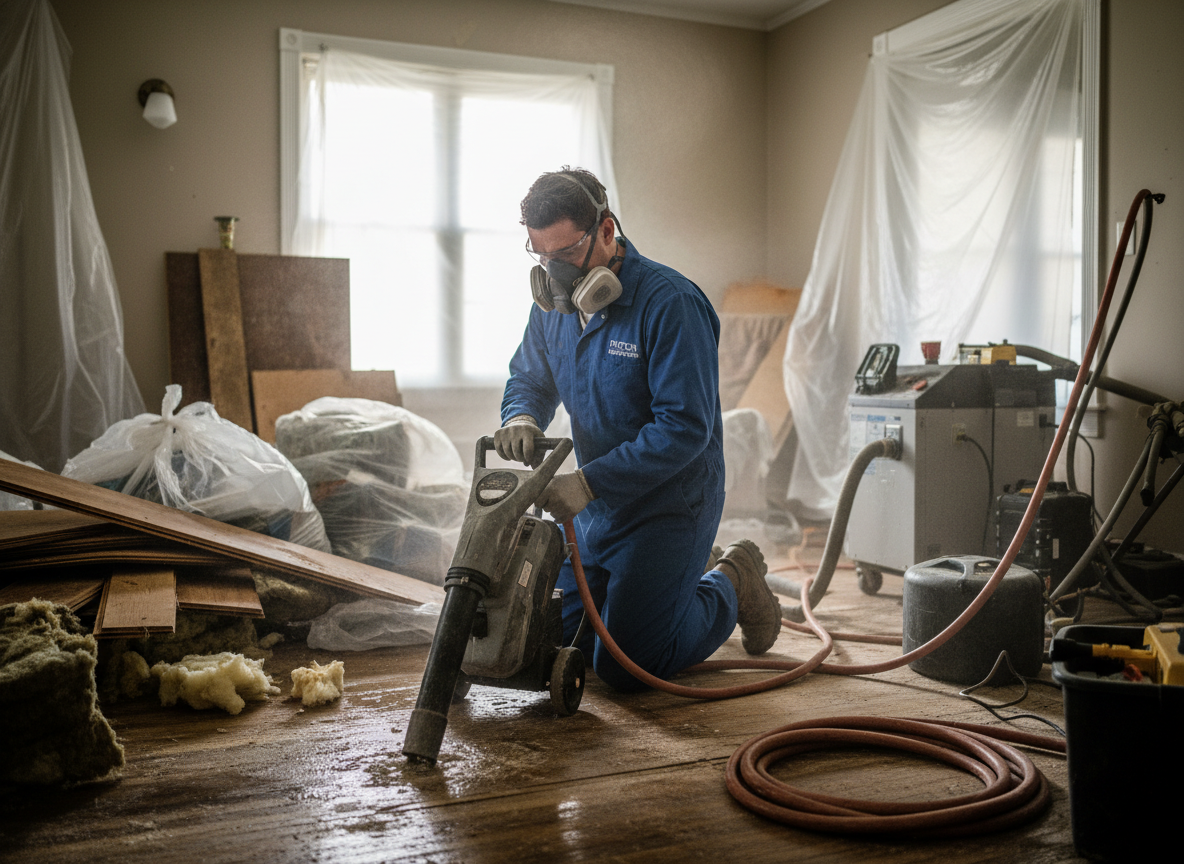
Patton sits in San Bernardino County with many homes built before modern plumbing codes, where galvanized lines and slab construction allow small leaks to travel under foundations without surface signs. Hot summer temperatures expand pipes while mild winters keep soil moisture levels steady, so leaks often surface only after drywall saturation or flooring cupping near Highland or San Bernardino borders. Technicians use moisture meters and infrared imaging to trace water paths through older plaster and lath walls rather than assuming visible stains mark the source.
Once the leak point is isolated, extraction focuses on pulling water from under cabinets and toe-kicks where Patton's older single-story homes trap moisture against stucco exteriors. Drying equipment must account for the area's low winter humidity that can mask lingering dampness inside wall cavities, leading to hidden mold if not addressed. Restoration then replaces only the affected sections of drywall or subfloor, matching original textures found in neighborhoods surrounding Patton State Hospital.
Homeowners sometimes attempt DIY shutoffs that leave residual pressure in branch lines, allowing leaks to restart after the main valve is reopened. Proper restoration includes checking adjacent units in multi-family properties common along Highland Avenue, because shared walls can channel water between addresses. Final verification uses pinless meters to confirm moisture readings below 12 percent before any finishes are reinstalled.
Technician insight
In Patton, the thing that catches most people out with Water leak restoration is the way hot summer expansion stresses older galvanized lines under slabs near Patton State Hospital, letting water travel several feet before it shows up in living spaces.
Hidden pipe leak near Highland Avenue
A homeowner noticed buckling hardwood in a 1960s Patton house. Inspection revealed a pinhole leak in a galvanized supply line that had traveled under the slab toward the front porch. Extraction and drying equipment ran for three days to pull moisture from the subfloor; only the affected section of flooring was replaced and the line was rerouted above grade to prevent recurrence.
How it works
- 1
On-site inspection
Technicians arrive within hours and map the leak path using non-invasive tools suited to Patton's older slab homes.
- 2
Water extraction
Standing water is removed from floors and wall bases before it migrates toward Patton State Hospital area properties on lower grades.
- 3
Targeted drying
Air movers and dehumidifiers run in contained zones to pull moisture from cavities without disturbing undamaged sections of the home.
- 4
Repair and verification
Damaged materials are replaced and final moisture checks confirm the structure is dry before any cosmetic work begins.
Pricing
Upfront quotes after inspection; cost depends on leak location, materials affected, and drying time required.