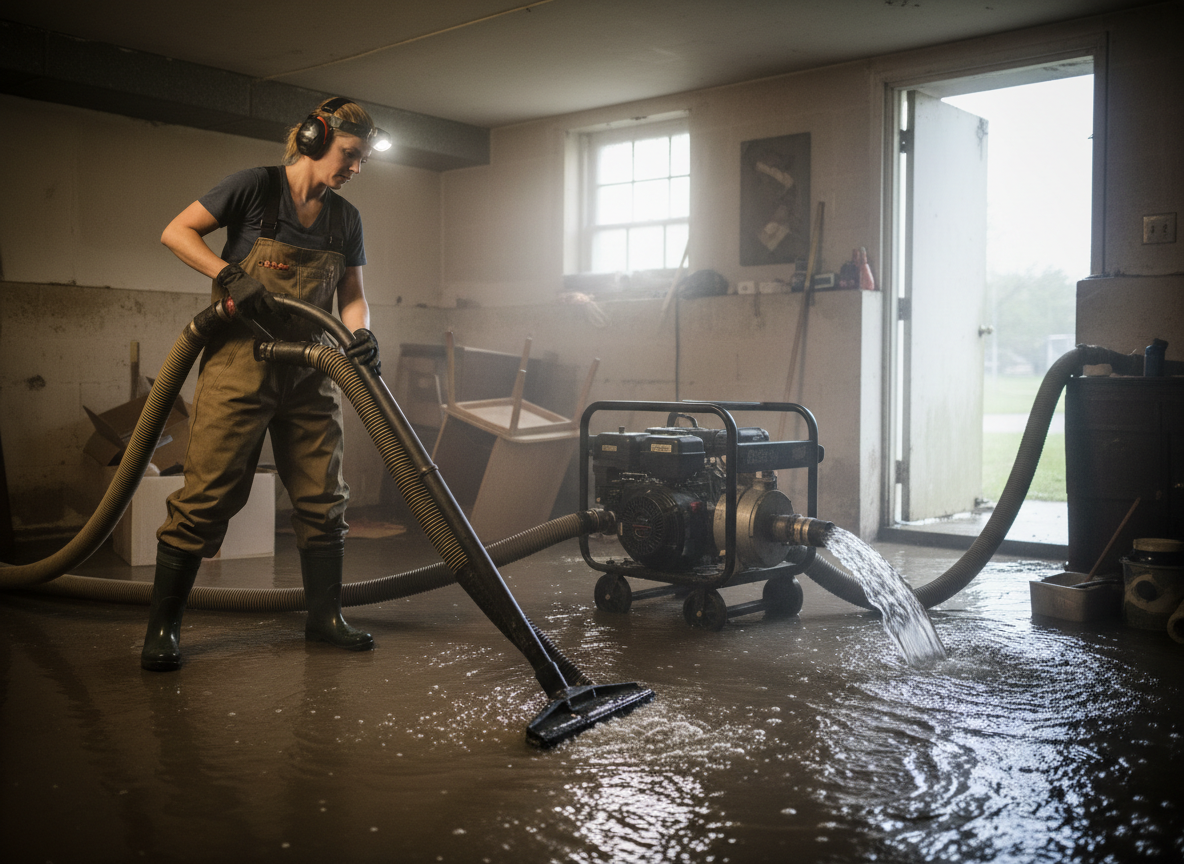
Water extraction in Patton often starts with identifying how Mediterranean climate patterns affect moisture movement. Hot summers increase reliance on cooling systems that can leak into older single-story homes common around Highland Avenue, while mild winters bring occasional heavy rains that pool on flat valley terrain. Crews use truck-mounted pumps and portable extractors rated for both clear and category two water, focusing on subfloor cavities where clay soils retain moisture longer than sandy ground found farther east in San Bernardino County.
Technicians check for hidden water behind baseboards and inside wall cavities near Patton State Hospital properties, where many structures date to the mid-twentieth century and have limited access points. Extraction continues until moisture readings drop below 15 percent on concrete slabs and wood framing. Failure to reach these levels allows mold to establish within 48 hours in the region's humidity, especially when summer temperatures push indoor conditions above 80 degrees.
Edge cases include extraction after sewer backups common in aging Patton neighborhoods where tree roots invade clay sewer lines. Crews isolate affected zones, use HEPA air scrubbers during removal, and document water migration paths to support insurance claims without over-extracting and damaging original plaster or hardwood. All work follows San Bernardino County health guidelines for gray-water handling.
Technician insight
In Patton, the thing that catches most people out with water extraction is how the clay soils around the San Bernardino valley hold water for days after rain, so extraction from crawl spaces near Patton State Hospital often takes longer than the same job in Highland where drainage is slightly better.
Kitchen leak near Highland Avenue
A supply line under a sink failed overnight in a Patton home, sending water across the slab and into the adjacent laundry room. Extraction crews found water had wicked under vinyl flooring and reached the base of a load-bearing wall. Industrial pumps removed the bulk, followed by targeted wand work along the slab edge until meters read safe levels, allowing the homeowner to begin repairs without extended demolition.
How it works
- 1
On-site assessment
Technicians arrive within the service area, map water depth and type, and locate migration routes through crawl spaces or slab edges typical in Patton homes.
- 2
Water removal
Industrial pumps and wands extract standing water from floors, carpets, and wall bases while protecting unaffected rooms.
- 3
Moisture verification
Readings are taken on concrete, wood, and drywall until levels meet drying standards for the local climate.
- 4
Final clearance
Area is cleaned of residue and prepared for drying equipment or further restoration steps.
Pricing
Pricing depends on water volume, access difficulty, and whether category two or three water is present; upfront quotes given on site.