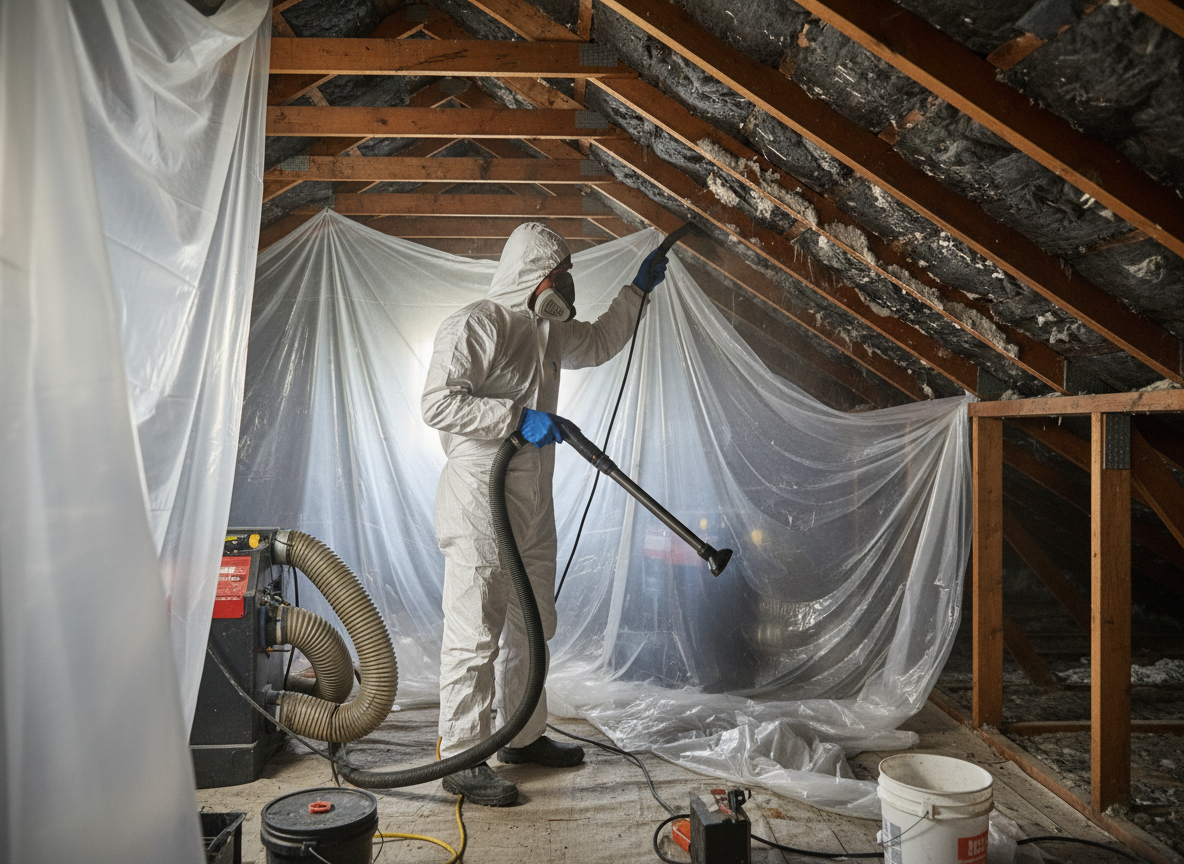
Attic mold in Patton often starts from condensation that builds during the area's hot Mediterranean summers when warm air hits cooler roof decks. Older housing stock near Patton State Hospital and along Highland Avenue frequently lacks modern ridge vents or sufficient insulation, letting humidity linger in the rafters. Remediation begins with containment using plastic sheeting and negative air machines to keep spores from drifting into living spaces below. Technicians remove affected insulation and sheathing only after moisture mapping confirms the full extent, then apply EPA-registered antimicrobials followed by HEPA vacuuming.
San Bernardino County building codes require proper attic ventilation ratios, yet many Patton homes built before the 1980s fall short. This forces extra steps during remediation such as adding soffit vents or baffles once the mold is cleared. Crews also inspect for hidden leaks around plumbing stacks and chimney chases common in the neighborhood's single-story ranch homes. Drying equipment runs for several days because the mild winters keep ambient humidity higher than expected, slowing evaporation in enclosed attic cavities.
Homeowners sometimes attempt DIY bleach sprays that only discolor surface growth while leaving roots in wood members. Professional removal includes disposal of contaminated materials at approved San Bernardino County facilities and post-remediation air sampling to verify clearance. Access is often limited through small scuttle holes in Patton homes, requiring technicians to work in sections and protect drywall ceilings below from foot traffic damage.
Technician insight
In Patton, the thing that catches most people out with attic mold remediation is how hot summers create repeated condensation cycles in pre-1980 homes around Patton State Hospital where ridge vents were never added during roof replacements.
Hidden Mold After Summer Heat
A Patton homeowner noticed musty odors in the hallway after weeks of 100-degree days. Inspection revealed black growth along rafters above the bathroom where a missing soffit vent allowed moist air to stagnate. Technicians contained the space, removed wet insulation, treated the wood, and added proper ventilation before new insulation was installed. The home passed clearance testing and the odor disappeared.
How it works
- 1
Inspection and Moisture Mapping
Technicians enter the attic through existing access points and use moisture meters plus thermal imaging to locate all affected zones without disturbing insulation unnecessarily.
- 2
Containment Setup
Plastic barriers and negative air machines isolate the attic from the rest of the home to prevent spore migration into living areas during removal.
- 3
Removal and Cleaning
Contaminated insulation and wood surfaces are removed or treated with registered antimicrobials, followed by HEPA vacuuming of remaining rafters and sheathing.
- 4
Drying and Ventilation Upgrade
Air movers and dehumidifiers run until readings drop below 15 percent moisture content, then any needed ventilation improvements are completed before reinstalling insulation.
Pricing
Cost depends on attic size, mold extent, and access difficulty; inspection provides exact scope.