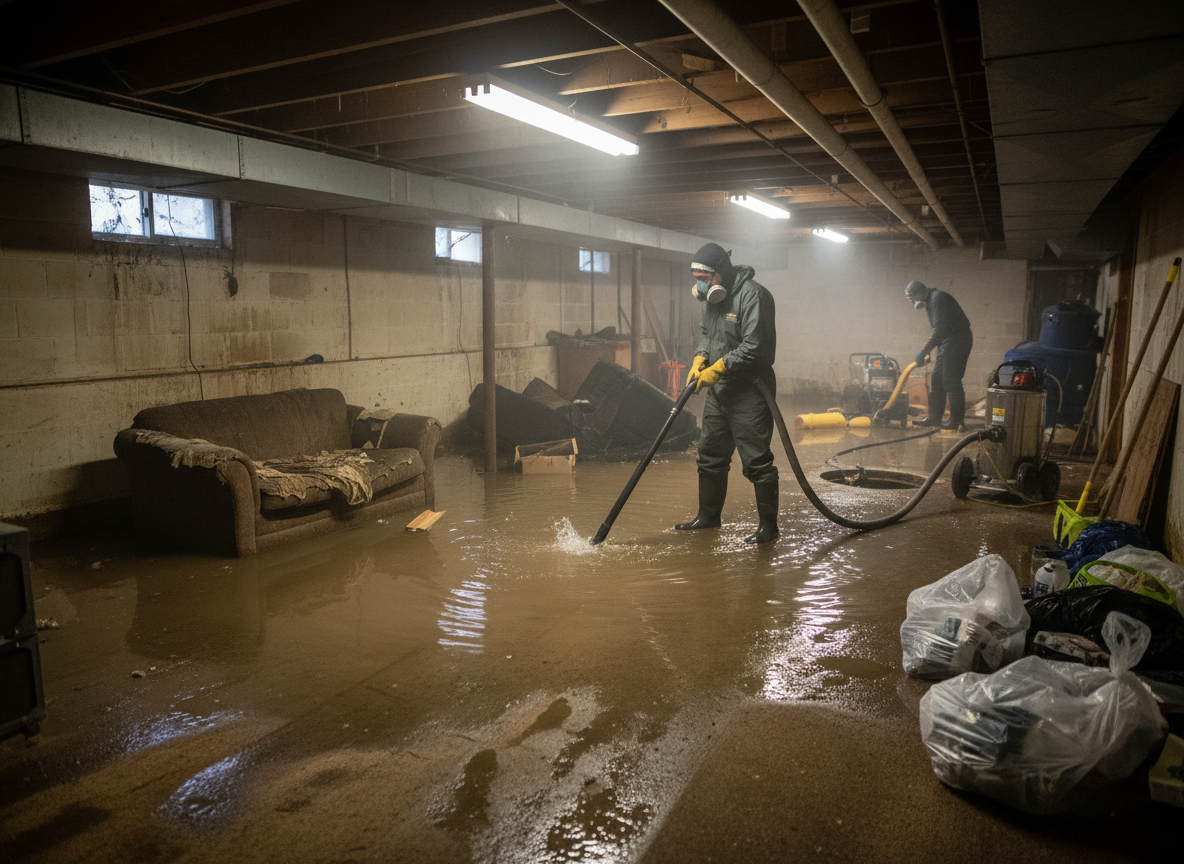
Patton sits in San Bernardino County with older housing stock near Patton State Hospital that often includes basements or partial cellars built before modern drainage standards. Winter rains in the Mediterranean climate can overwhelm aging foundation drains, especially in areas close to Highland where soil shifts during wet periods. We extract standing water, remove saturated drywall up to the flood line, and deploy industrial dehumidifiers to pull moisture from concrete block walls that hold water longer than newer poured foundations.
Edge cases in Patton include sewage backups from older municipal lines that run through low-lying neighborhoods and hidden mold growth behind finished basement walls after repeated minor leaks. We test for hidden moisture with meters rather than stopping at visible water and separate contaminated materials immediately to avoid cross-contamination into living areas above. Code requirements in San Bernardino County call for proper disposal of flooded insulation and verification that vapor barriers remain intact before any rebuild begins.
Homeowners often overlook the HVAC return ducts that pull air from basements; we isolate and clean these systems when floodwater reaches the equipment. Terrain around Patton State Hospital slopes in places, directing runoff toward foundations on the east side of Highland Avenue. We place containment barriers and negative air machines early to keep particulates from migrating upstairs during demolition.
Technician insight
In Patton the thing that catches most people out with basement flood cleanup is older homes near Patton State Hospital where the original clay tile drains have collapsed under decades of San Bernardino County soil movement. Homeowners think once the water is pumped out the job is done, but the block walls stay wet for weeks and push moisture back into the slab if we do not keep equipment running long enough.
Highland Avenue Basement After Winter Rain
Heavy December rain sent runoff down the slope behind a Patton home near the hospital. Water entered through a cracked foundation seam and rose six inches across the finished basement. We extracted the water, cut out saturated drywall, and ran drying equipment for five days until readings on the concrete dropped below 12 percent. The homeowner avoided mold growth and was able to start repairs without further demolition.
How it works
- 1
Emergency Water Extraction
Remove standing water using truck-mounted pumps and portable extractors suited for confined basement spaces in Patton homes.
- 2
Moisture Mapping and Containment
Use meters to locate hidden water in walls and floors, then set up containment to protect unaffected areas near Patton State Hospital.
- 3
Drying and Dehumidification
Deploy air movers and dehumidifiers sized for the basement volume while monitoring daily moisture levels.
- 4
Sanitizing and Final Verification
Apply antimicrobial treatments where needed and confirm dryness before allowing reconstruction to begin.
Pricing
Pricing depends on water volume, affected square footage, and whether sewage contamination is present; we provide upfront assessments at your Patton address.