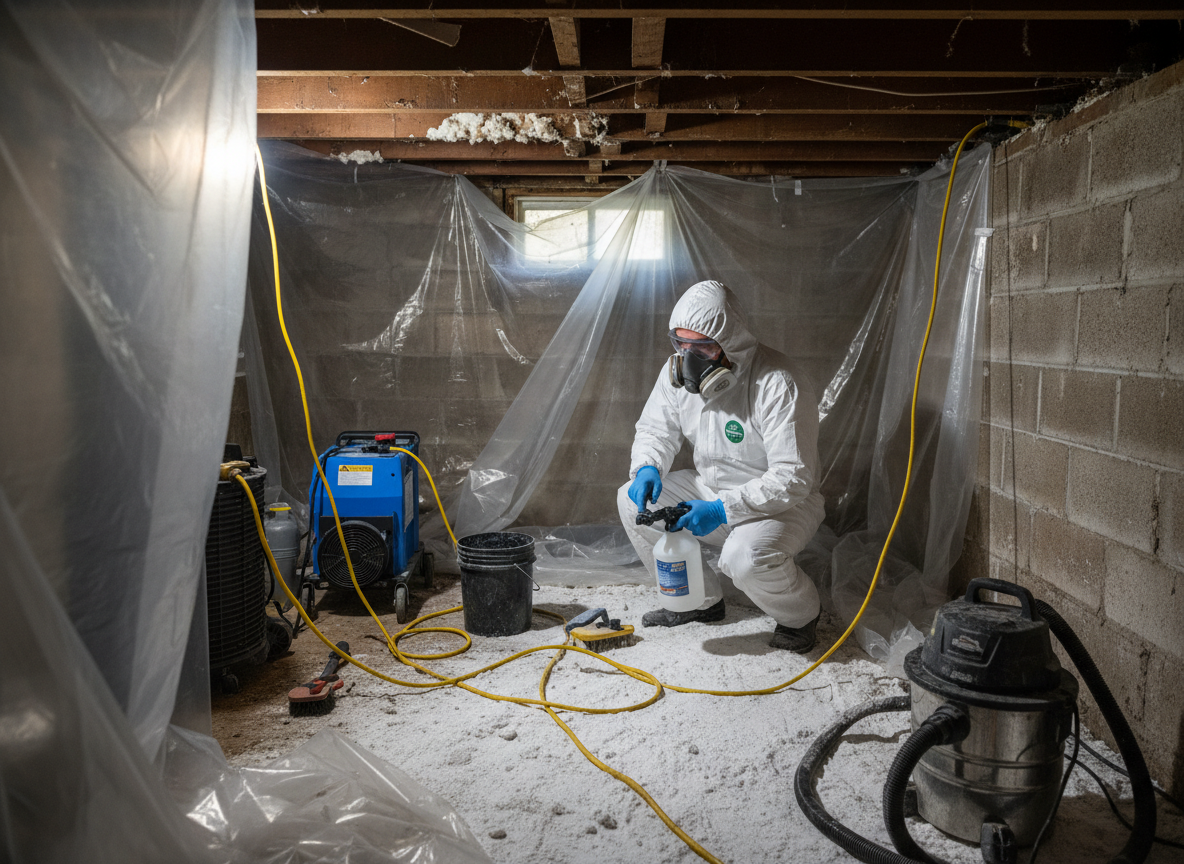
Patton homes built mid-century near Patton State Hospital often feature dirt-floor crawl spaces with minimal ventilation, allowing moisture from San Bernardino County's occasional winter rains and summer humidity to linger. This setup promotes mold growth on joists and insulation, especially when combined with the clay-heavy soils that hold water longer than sandy terrain. Removal requires sealing off the space, HEPA vacuuming visible colonies, and applying antimicrobial treatments that penetrate porous wood without damaging structural integrity.
Access challenges in Highland-adjacent neighborhoods include low clearances and aging ductwork that can spread spores if disturbed. Technicians must map moisture sources first, often tracing them to roof runoff or irrigation leaks common on sloped lots around 3102 E Highland Ave properties. After remediation, installing vapor barriers and improving airflow prevents recurrence, since hot summers here dry surfaces quickly but leave hidden damp pockets that re-ignite growth once temperatures moderate.
Edge cases arise when mold extends into wall cavities or under concrete perimeter footings, requiring targeted demolition and air scrubbing to meet San Bernardino County health guidelines. Homeowners should avoid DIY bleach applications, which can drive spores deeper into wood. Professional extraction followed by moisture metering ensures levels stay below thresholds that support regrowth in this climate.
Technician insight
In Patton, the thing that catches most people out with crawl space mold removal is how mild winters followed by hot summers keep humidity trapped under older homes near Patton State Hospital, where dirt floors and poor grading let San Bernardino rain soak in without quick evaporation.
Highland Border Home Crawl Space
A homeowner noticed musty odors after winter rains. Inspection revealed mold on joists from irrigation seepage near the property line. We contained the space, removed insulation, treated wood, and added a vapor barrier. Follow-up confirmed dryness and no regrowth.
How it works
- 1
Initial Inspection
Assess crawl space access, map moisture readings, and identify mold extent using tools suited to Patton's older dirt-floor homes.
- 2
Containment Setup
Seal the area with plastic barriers and negative air machines to prevent spore migration into living spaces during removal.
- 3
Mold Extraction and Treatment
Remove affected insulation and growth, apply EPA-registered antimicrobials to wood, then dispose of debris per local regulations.
- 4
Drying and Prevention
Install vapor barriers, improve ventilation where feasible, and confirm dryness with meters before closing the space.
Pricing
Costs depend on square footage, depth of mold into joists, and access difficulty typical of mid-century Patton crawl spaces.