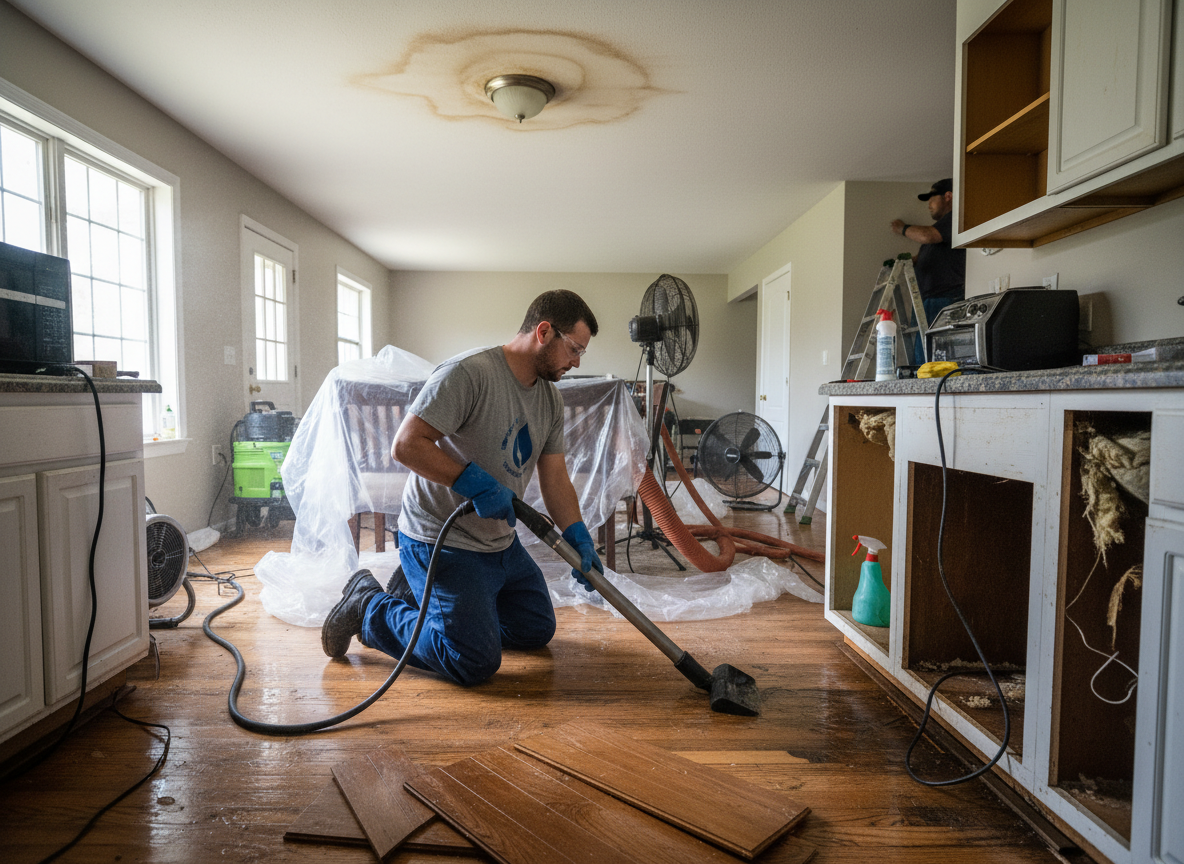
Kitchens in Patton homes often sit in older housing stock common across San Bernardino County, where galvanized or copper supply lines from past decades develop pinhole leaks behind cabinets. These leaks travel along subfloors toward nearby Highland properties, especially when hot summer temperatures expand joints and mild winters allow undetected moisture to linger. Technicians must pull base cabinets and check for hidden rot under vinyl or tile, because Mediterranean climate swings accelerate mold on particleboard once saturation exceeds 15 percent.
Dishwashers and refrigerators with ice makers create the majority of kitchen calls here. A failed supply line under a unit can dump several gallons before detection, soaking particleboard toe-kicks and traveling into adjacent drywall shared with laundry rooms. Extraction requires removing the toe-kick and using air movers angled beneath the cabinet box while monitoring moisture meters on the slab, since Patton soil retains humidity longer than surrounding foothills.
Code compliance matters when water reaches electrical outlets or gas lines behind ranges. San Bernardino County inspectors expect GFCI protection and proper shut-off valves after repair, and any compromised underlayment must be replaced to current standards rather than patched. Homeowners who attempt DIY drying often trap moisture between the floor and cabinet carcass, leading to repeat odor issues months later when summer heat reactivates spores.
Technician insight
In Patton, the thing that catches most people out with Kitchen water damage repair is the way older slab-on-grade homes around Patton State Hospital trap moisture under toe-kicks because the mild winters never force a full freeze-thaw cycle, so leaks from refrigerator lines stay hidden until the particleboard swells and the smell appears during the next hot summer.
Dishwasher supply line failure near Highland border
A homeowner in Patton noticed water seeping from under the dishwasher after a hot afternoon. Inspection revealed a cracked braided line that had soaked the subfloor and traveled under adjacent cabinets into the dining area. Extraction and targeted drying under the toe-kicks prevented mold growth; new underlayment and base cabinets were installed to match the existing layout.
How it works
- 1
On-site assessment
Technician maps all wet materials using moisture meters and thermal imaging, documenting affected cabinetry, flooring, and walls in Patton kitchens.
- 2
Water removal and containment
Portable extractors pull standing water; plastic barriers isolate the kitchen from living areas to prevent cross-contamination into hallways.
- 3
Targeted drying
Air movers and dehumidifiers are placed under cabinets and along baseboards while daily moisture readings track progress until readings match unaffected areas.
- 4
Repair and sanitation
Damaged underlayment and cabinet bases are replaced; antimicrobial treatment is applied to framing before new flooring and cabinetry are installed.
Pricing
Upfront quotes after inspection; cost driven by square footage affected, cabinet replacement needs, and drying duration.