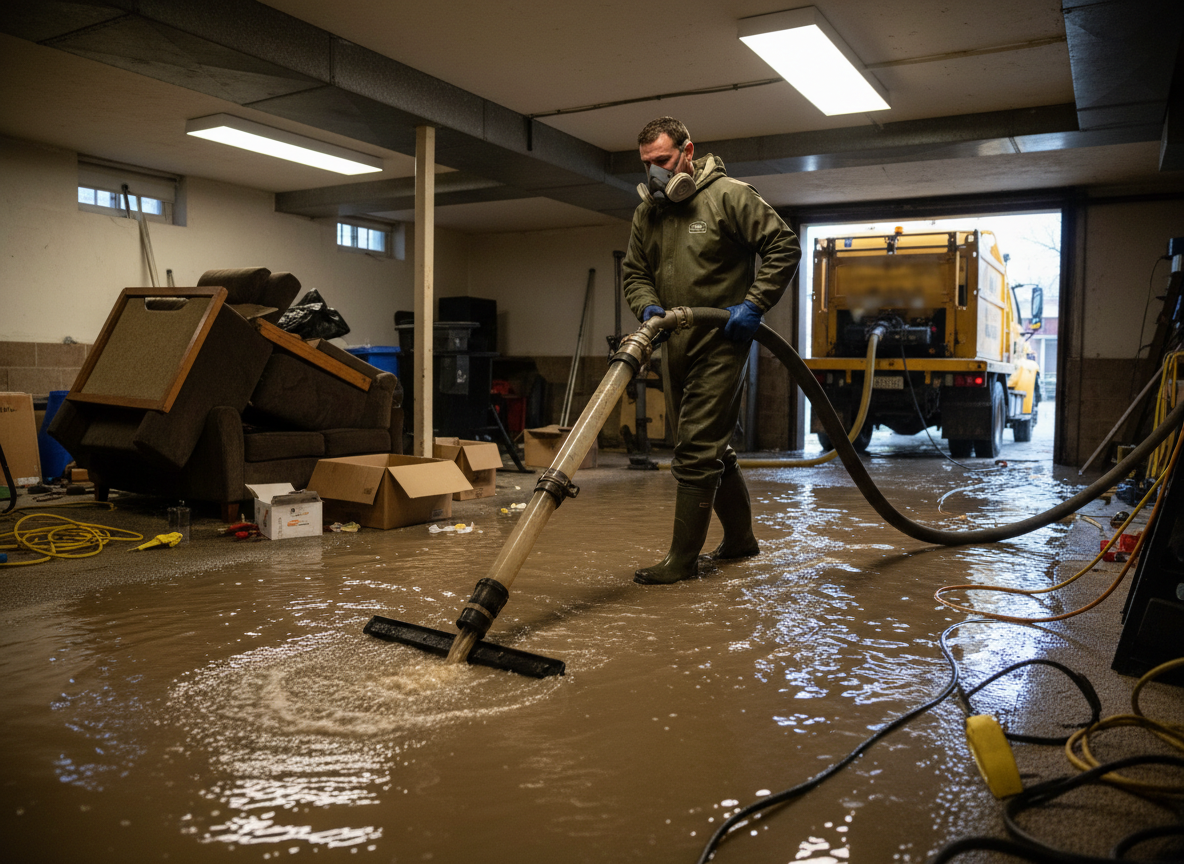
Rapid water extraction starts with locating the water source and removing standing water before it migrates into subfloors or wall cavities common in Patton's older housing stock built near Patton State Hospital. In San Bernardino County, Mediterranean summers push humidity spikes that accelerate mold on wet drywall within 48 hours, so crews use high-volume truck-mounted pumps and moisture meters to pull water from concrete slabs and crawl spaces without tearing out more material than needed. Highland and San Bernardino neighbors often see irrigation leaks or monsoon runoff that pools against foundations on the slight slopes around Patton, requiring angled extraction wands to reach under cabinets and appliances.
Edge cases include water trapped behind lath-and-plaster walls in pre-1960 homes, where slow seepage can reach electrical boxes if not mapped first. Technicians mark affected zones with infrared cameras before extraction to avoid chasing moisture into neighboring units in multi-family buildings near Highland Avenue. After pumps clear visible water, air movers and dehumidifiers run on a grid pattern calibrated to the mild winter temperatures that keep evaporation slow, preventing hidden saturation in insulation that later causes musty odors.
Local soil conditions around Patton add another layer: clay-heavy ground holds moisture against stem walls longer than sandy soils farther east in the county, so extraction plans include perimeter checks with pin meters. Crews avoid over-wetting carpet pads that can wick water back into tack strips, a common callback in San Bernardino rentals. Every job ends with a written moisture log left with the homeowner so they can verify readings before any reconstruction begins.
Technician insight
In Patton, the thing that catches most people out with rapid water extraction is clay soil along the base of the hills near Patton State Hospital that keeps water pressed against foundations for days after the rain stops, so homeowners who only run a shop vac in the garage miss the moisture wicking up into the sill plates of 1950s homes.
Highland Avenue irrigation line break
A homeowner in Patton noticed water seeping from under the garage slab after a hot summer day. We found the leak had traveled under the concrete and into the adjacent bedroom subfloor. Extraction focused on pulling water from the slab edges and drying the joist bays without removing the entire floor. Daily readings confirmed dry conditions within four days and the owners avoided mold remediation.
How it works
- 1
Source Identification
Locate and stop the active water source using shutoff valves and pressure testing on Patton properties.
- 2
Standing Water Removal
Deploy submersible pumps and wet vacuums to extract bulk water from floors and low areas within the first hour.
- 3
Moisture Mapping
Use meters and infrared to chart hidden saturation in walls, subfloors, and insulation across the affected footprint.
- 4
Drying Setup
Position air movers and dehumidifiers in a calculated grid, then monitor daily until readings return to ambient levels.
- 5
Final Verification
Provide a printed moisture report and walk-through before equipment removal.
Pricing
Pricing depends on square footage affected, water category, and access to hidden areas.