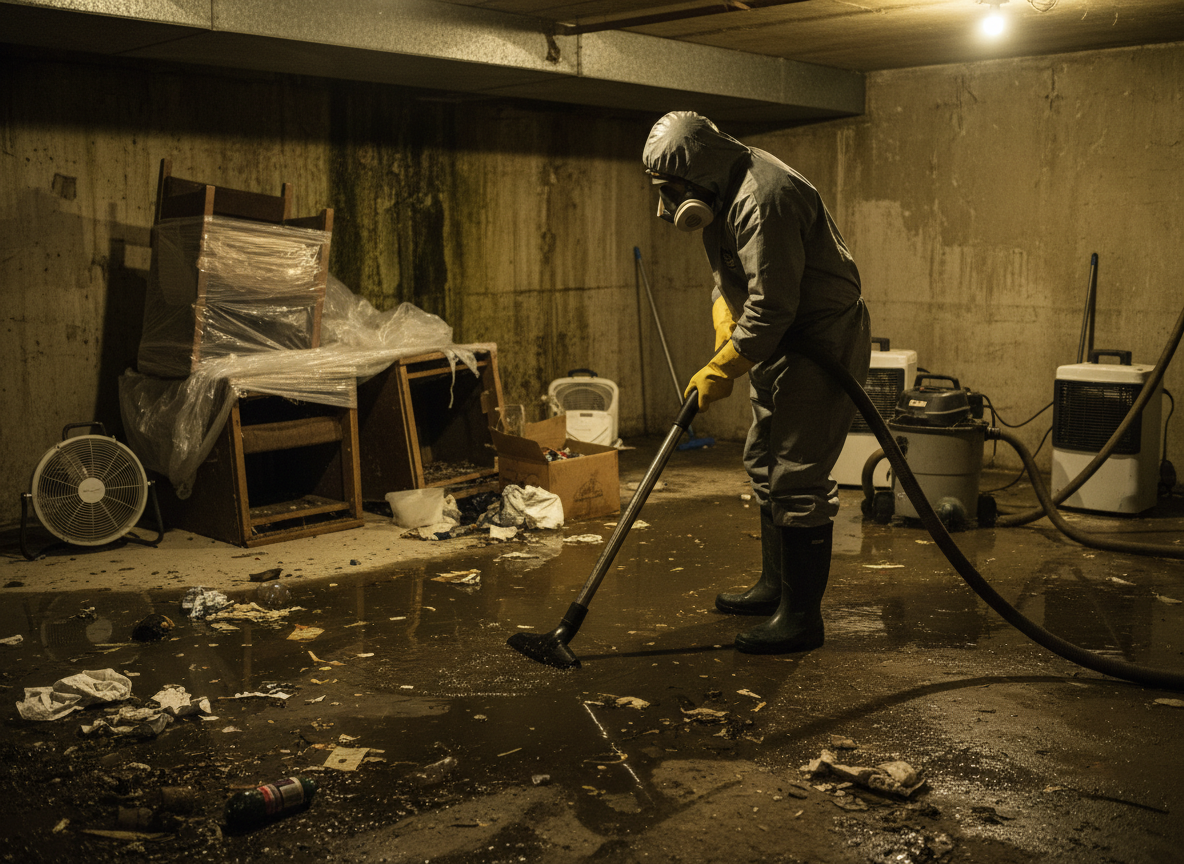
Sewage backups in Patton often trace to aging cast-iron lines in homes built before 1970, especially those clustered near Patton State Hospital and along Highland Avenue. When raw waste surfaces, the first priority is isolating the affected zone with physical barriers and negative air to keep pathogens from migrating into HVAC systems or adjacent rooms. Hot Mediterranean summers speed bacterial growth and odor penetration into drywall and subfloors, so crews remove saturated materials the same day rather than attempting to dry and salvage.
San Bernardino County health rules require documented removal of all porous materials that contacted category-three water; simply spraying disinfectant is never enough. Technicians use HEPA vacuums and EPA-registered antimicrobials rated for sewage, followed by moisture mapping to confirm hidden pockets behind baseboards or under tile in bathrooms common to Highland and San Bernardino properties. Edge cases include hillside homes where sewage can migrate downslope through soil and re-enter through foundation cracks after heavy winter rains.
Homeowners sometimes attempt their own cleanup with household bleach, which fails to neutralize viruses and can damage remaining structure. Professional crews wear full PPE and bag all waste for licensed disposal, avoiding any cross-contamination when transporting equipment back through the rest of the house. Final clearance includes ATP swab testing to verify surfaces meet post-remediation criteria before reconstruction begins.
Technician insight
In Patton, the thing that catches most people out with sewage cleanup is how fast summer heat turns a small backup behind a 1960s slab home near Patton State Hospital into hidden mold under the entire bathroom. Older cast-iron stacks crack from root intrusion common in this soil, and once waste reaches the dirt it travels laterally under the foundation faster than most expect.
Highland Avenue Slab Leak
A homeowner in a 1950s Patton house near Highland Avenue noticed foul water seeping from the hall bath after a mild winter rain. Inspection revealed a cracked cast-iron line under the slab that had allowed sewage to migrate into the subfloor and crawl space. Crews isolated the bathroom, removed the contaminated plywood and insulation, treated the joists, and confirmed clearance before the floor was rebuilt.
How it works
- 1
Emergency Containment
Technicians arrive within hours, set up physical barriers and negative air machines to isolate the sewage zone from the rest of the Patton home.
- 2
Removal of Contaminated Materials
All saturated carpet, drywall, and insulation that contacted waste are cut out and double-bagged for proper county disposal.
- 3
Disinfection and Antimicrobial Treatment
EPA-registered agents are applied to structural wood and concrete, followed by HEPA vacuuming to capture remaining particulates.
- 4
Drying and Clearance Testing
Industrial dehumidifiers and air movers dry the space while ATP testing confirms the area is safe for rebuild.
Pricing
Cost depends on square footage affected, depth of contamination into subfloors, and whether reconstruction is included; most Patton jobs are quoted after inspection.