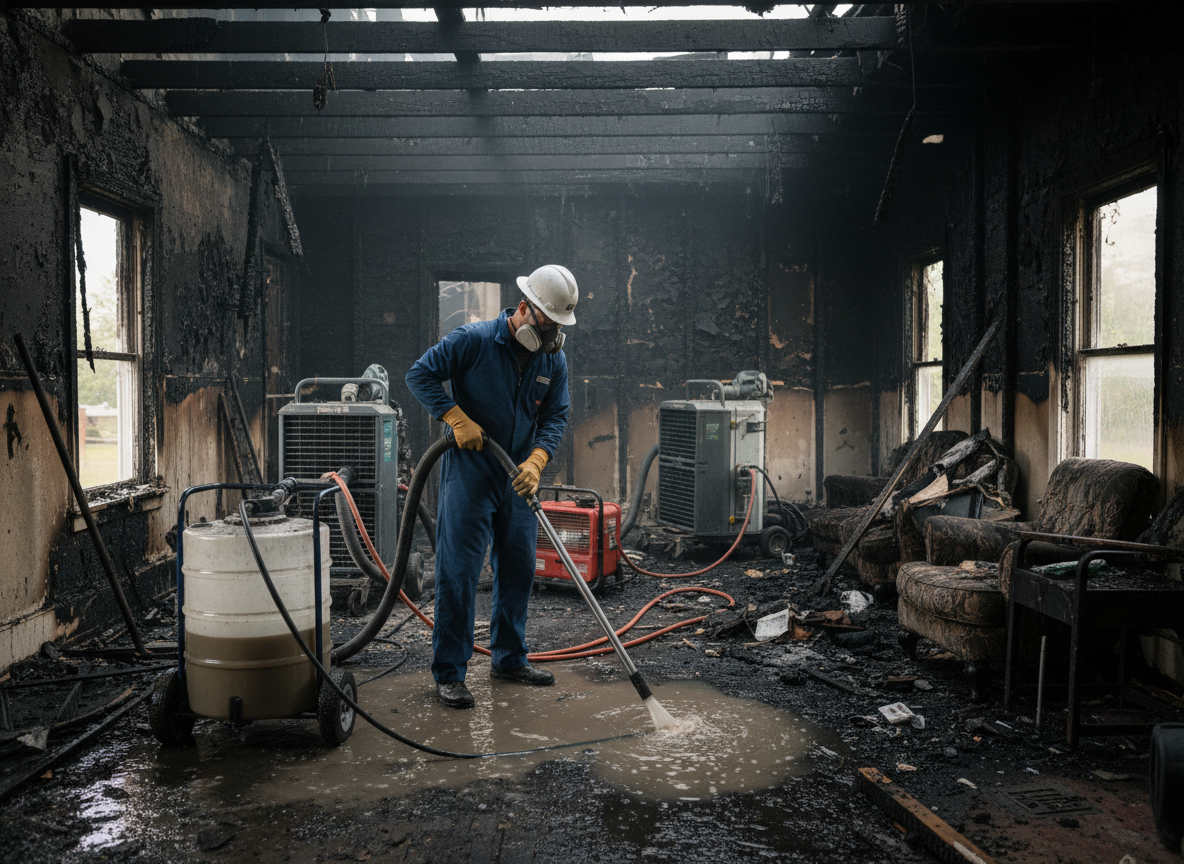
Firefighting efforts in Patton often leave standing water mixed with soot and chemicals that penetrate older plaster walls and hardwood floors common around Patton State Hospital. In San Bernardino County's Mediterranean climate, hot summer temperatures accelerate mold growth on saturated materials within 48 hours if extraction is delayed. Technicians must separate smoke-damaged porous surfaces from water-soaked structural elements to prevent cross-contamination during removal.
Mild winters in the area reduce natural evaporation rates compared to inland deserts, so dehumidification equipment runs longer on jobs near Highland. Residue from Class A foam or retardants used by local crews can etch concrete slabs and corrode copper piping if not neutralized early. Edge cases include hidden moisture trapped behind lath-and-plaster in pre-1960 homes, requiring moisture meters and infrared scans rather than visual checks alone.
San Bernardino County building codes require proper disposal of fire-water waste to avoid stormwater violations, especially near drainage channels feeding the Santa Ana River watershed. Homeowners sometimes attempt DIY drying with box fans, which spreads soot particles into HVAC systems and forces full duct cleaning later. Professional teams document affected square footage room-by-room to satisfy insurance adjusters working the Patton and Highland corridors.
Technician insight
In Patton, the thing that catches most people out with water damage remediation after fire is how quickly soot bonds to wet plaster in the older homes around the State Hospital once summer heat kicks in. Homeowners think the water is the only issue, but the combination of mild winters slowing evaporation and nearby drainage patterns pushing runoff back toward foundations means you have to pull baseboards and check under the slab or you will chase mold for months.
Highland Road Fire Suppression Water
A single-family home two blocks from Patton State Hospital took heavy water from crews extinguishing an attic fire. We found standing water had wicked into original hardwood and migrated under the slab toward the rear addition. Extraction and targeted drying prevented mold while preserving the rest of the structure.
How it works
- 1
Initial Assessment
Arrive within hours, map water migration paths from suppression efforts, and test for hidden moisture in walls and subfloors common in Patton housing stock.
- 2
Water Extraction
Remove standing water and firefighting foam residue using truck-mounted pumps suited to San Bernardino County's variable terrain and older plumbing layouts.
- 3
Contaminant Removal
Cut away saturated drywall and insulation while containing soot particles to protect unaffected areas near Patton State Hospital properties.
- 4
Drying and Monitoring
Deploy industrial dehumidifiers and air movers, logging daily moisture readings until levels match unaffected zones in the mild local winters.
- 5
Final Clearance
Perform post-remediation verification and provide documentation for insurance claims on homes in Patton and nearby San Bernardino.
Pricing
Upfront quotes provided after inspection; rates vary by affected square footage and material types.