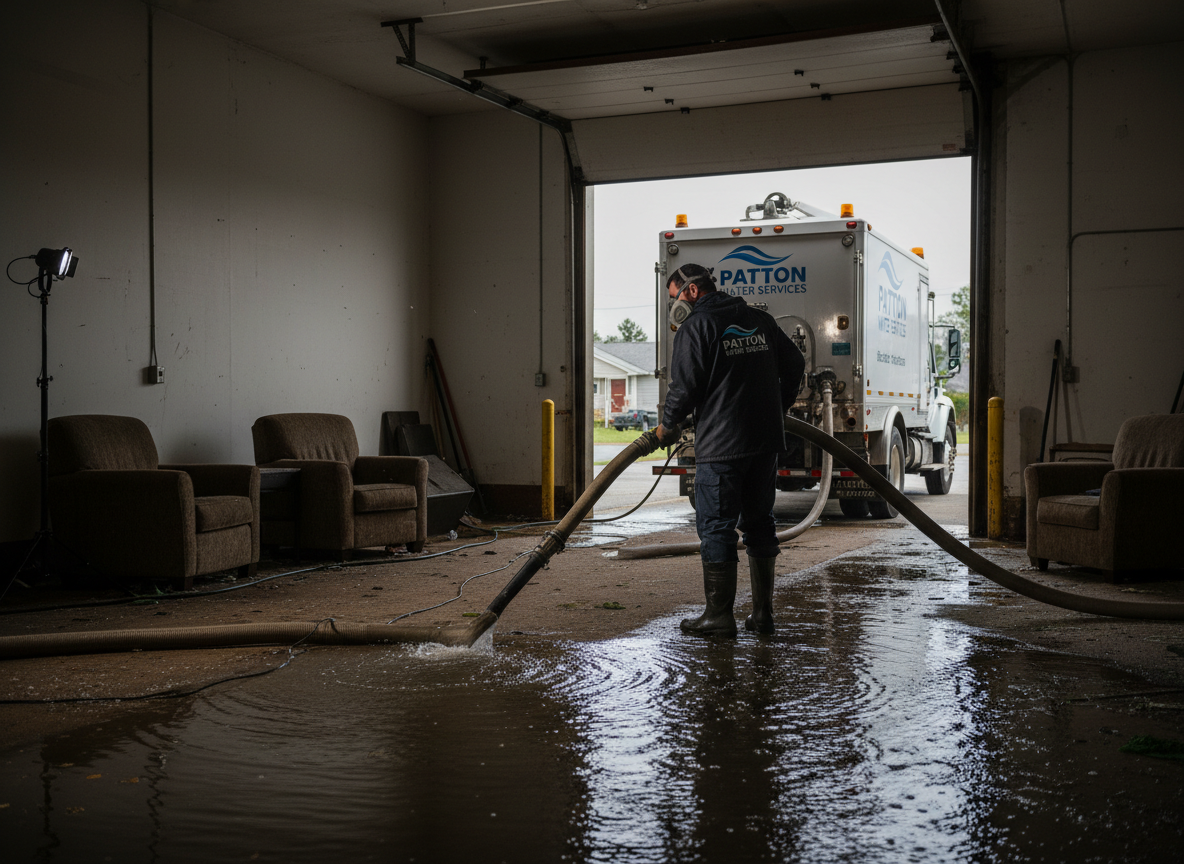
Patton sits in San Bernardino County with a Mediterranean climate that brings sudden winter rains after long dry summers. Older single-family homes near Patton State Hospital often have slab foundations and aging plumbing that lets water spread under floors before residents notice. Extraction crews must pull water quickly from carpet pads and subfloors because residual moisture in the local soil can wick back up through cracks and create hidden mold colonies within days.
Highland and San Bernardino neighborhoods share similar housing stock built from the 1950s onward with limited crawl spaces and flat lots that pool water during heavy downpours. Industrial extraction units rated for 200-plus gallons per minute are needed on these jobs because garden-hose methods leave too much behind in the porous concrete common here. Technicians also check for water that has traveled into wall cavities shared with neighboring units in duplexes along Highland Avenue.
Once visible water is gone, crews document moisture readings at multiple depths in drywall and flooring because Patton’s mild winters keep humidity high enough to slow natural drying. Skipping this step often leads to warped baseboards and musty odors weeks later when summer heat returns. Local crews carry truck-mounted systems sized for the narrow driveways typical around the state hospital grounds so equipment can reach backyard additions without damaging landscaping.
Technician insight
In Patton the thing that catches most people out with water extraction is how fast winter rain soaks into the cracked slabs of 1960s homes near the hospital; once it gets under the pad it travels sideways into the next room before anyone sees it.
Slab Leak Near Patton State Hospital
A kitchen supply line failed overnight in a single-story home two blocks from the hospital grounds. Water traveled under the slab and surfaced in the adjacent hallway. Extraction crews pulled standing water from the vinyl and pad, then set drying equipment across the living area. Follow-up readings three days later showed the slab had returned to baseline.
How it works
- 1
Site Assessment
Technicians arrive from the Highland Avenue base and map water migration through Patton homes using moisture meters on slabs and walls.
- 2
Standing Water Removal
Industrial pumps and wands extract bulk water from floors and carpets before it spreads into adjacent rooms or neighboring properties.
- 3
Targeted Drying Setup
Air movers and dehumidifiers are placed to pull remaining moisture from subfloors and wall cavities common in 1950s-1970s Patton construction.
- 4
Final Moisture Verification
Readings are taken again to confirm levels match dry standards before equipment is removed and the property is released.
Pricing
Pricing varies by water volume, depth of penetration into slabs, and access constraints around older Patton properties.